Most small interior firms do not run short of interior design leads. They run short of bookings. The enquiries arrive from Instagram, JustDial, a paid portal and the odd referral, and somewhere between the first call and the booking advance most of them go quiet. The usual response is to buy more leads, which adds more calls and more site measurements and fixes nothing.
The short answer: leads die at six predictable points, namely the first call, qualification, site measurement, design presentation, quotation revisions and the booking advance. Each has a different cause and a different fix. This post covers where leads come from, then each of those six stages, with a worked example in rupees for a small studio.
Where interior design leads come from
Briefly, because this part is well covered elsewhere. In rough order of how often they book:
- Referrals from past clients. They arrive already trusting you. Ask at handover, and again a month later when guests have seen the kitchen.
- Builders, brokers and new societies. A tower that is handing over possession is a few hundred people who need a kitchen and wardrobes in the same three months. One finished flat in that tower is the easiest way to win the next few.
- Google Business Profile. People search “interior designer near me” and “modular kitchen in [city]”. Add or claim the profile, verify it, fill in the areas you serve and put up photos of real sites. Google’s own help page explains how service areas work.
- Instagram. Your portfolio, in effect. Good for being found and remembered; the enquiries arrive as DMs with no phone number, so ask for one in the first reply.
- Google and Instagram ads. Volume on demand. Expect many people who are a year from possession or have a quarter of the budget.
- JustDial, portfolio sites such as Houzz, and lead marketplaces. Before paying, ask two things: is the lead sent only to you or to several firms, and is the fee per lead or a share of the project?
Whatever the mix, write the source on every lead. Without it you cannot tell which channel brings projects and which brings phone calls. Tracking lead sources shows the sum.
Why most interior design leads never become projects
An interior project is not sold in one conversation. It is sold in six, spread over weeks, and each has a gap after it where nothing is scheduled. The lead does not say no. It simply stops, and nobody notices because nobody was due to call.
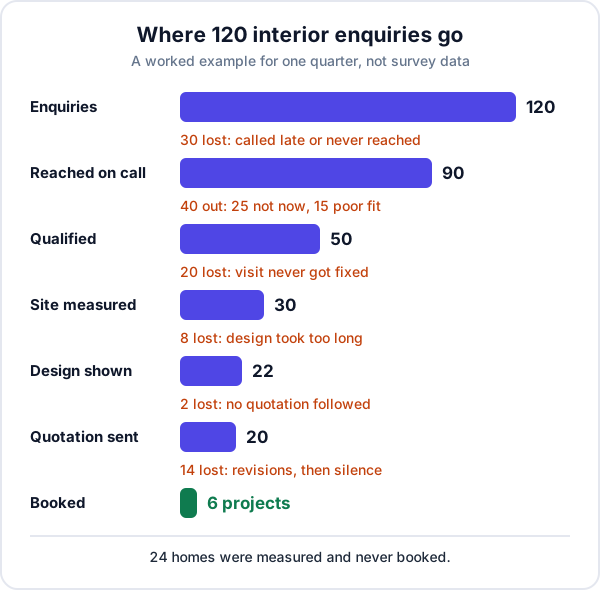
A worked example in rupees
Say a five-person studio in Pune spends ₹90,000 in a quarter on ads and a portal listing and gets 120 enquiries. These figures are made up to show the arithmetic; yours will differ.
| Stage | Leads left | What happened to the rest |
|---|---|---|
| Enquiries | 120 | ₹750 each |
| Reached on a call | 90 | 30 called late or never reached |
| Qualified | 50 | 25 not ready yet, 15 poor fit |
| Site measured | 30 | 20 visits never got fixed |
| Design shown | 22 | 8 cooled while the design was pending |
| Quotation sent | 20 | 2 never got a quotation |
| Booked | 6 | 14 went silent during revisions |
Six projects at an average of ₹5 lakh is ₹30 lakh of work, and each booking cost ₹15,000 in marketing. That looks fine. The hidden cost is the 24 homes that were measured and never booked. If a measurement, a layout and a quotation take about eight hours of staff time, that is 192 hours in a quarter spent on work nobody paid for.
Now compare two ways to reach eight projects. Buying 40 more leads at the same rates costs ₹30,000 and brings ten more measurements, eight of them unpaid. Saving two of the fourteen clients who went silent after the quotation costs a few phone calls. The second is cheaper, and it is the one most firms never try.
The six stages, and what to do at each
1. The first call
A portal or ad lead has usually enquired with other firms the same evening. The one who calls within the hour, and sounds like they have done this before, gets the site visit. A lead that waits until the designer is back from site the next afternoon is often already booked for measurement with someone else. Decide who makes first calls when the owner is on site, and keep it to one person.
2. Qualification
Five questions, asked on that first call and written on the lead:
- When is possession, or is the flat ready now?
- What is the scope: kitchen only, kitchen and wardrobes, or the full home?
- What budget do you have in mind?
- Who else decides? Spouse, parents, a brother who “knows a carpenter”?
- Have you taken quotations from anyone else?
The answers sort leads into three groups: ready now, ready later, and not a fit. The mistake is treating “later” as dead. In the example, 25 of the 40 dropped at this stage had a possession date months away. They are next quarter’s bookings if someone calls them a month before possession, and lost to whoever does if nobody calls.
3. Site measurement
Fix the measurement date on the qualifying call, not “we will coordinate”. Every day between the call and the visit is a day the client can meet another firm. Send a WhatsApp message the evening before, confirm who will be at the flat with the keys, and ask that the person who decides is present.
Some firms charge a small measurement or design fee and adjust it against the booking. It cuts unpaid visits, and it also turns away some genuine clients. There is no right answer; test it on paid-source leads for a month and compare bookings.
4. Design presentation
This is the stage with no deadline, so it takes two weeks. By then the client has seen someone else’s layout. At the measurement visit, commit to a date for the presentation and keep it.
Present in person or on a video call with everyone who decides, not as a PDF on WhatsApp. A design sent as a file gets forwarded to a carpenter for a cheaper price. Show it, talk through it, and hand over working drawings after booking.
5. Quotation and revisions
This is the largest leak. The client is comparing your quotation with a carpenter’s per-square-foot figure, and the two do not describe the same thing. Help them compare honestly:
- Itemise by room, and state the materials: plywood grade, shutter finish, hardware brand.
- Give two options, for example laminate and acrylic, so the choice is between your options rather than between you and someone else.
- Number every version and put a validity date on it.
- End every revision with a fixed date to speak again. A revision sent with “let me know” is how fourteen leads go silent.
How to write a quotation that gets accepted goes further into the document itself.
6. The booking advance
A client who has agreed the design and the price still stalls at paying. “After Diwali”, “after the loan disbursement”, “after the griha pravesh date is fixed”. Make the step small and clear: the advance amount, what it locks (the quoted price and a production slot), and the remaining payment schedule in writing. Then ask for it, and call on the date they gave you. Check with your accountant how GST applies to the advance for your kind of contract.
Leads that should die
Not every loss is a leak. A client with ₹1.5 lakh for a full 3BHK, a tenant who needs the landlord’s permission, someone outside the area you can supervise: letting these go at the qualifying call is the process working. The loss worth worrying about is the one after you measured and designed.
And if you are a two-person firm doing one project a month entirely from referrals, you do not need a funnel table. You need the possession dates written down and a habit of calling on them.
The numbers worth counting
Once a month, count the seven rows of the table above for your own firm, split by source if you can. Then look at the biggest drop between two rows. That is the stage to fix first, and it is rarely the top one. Record why each lost lead was lost, in a word or two: budget, carpenter, postponed, no reply. After a quarter the pattern is obvious. A simple follow-up process with a next date on every open lead does most of the rest.
Where Enkay CRM fits
Enkay CRM from Enkay Technologies does not find interior design leads for you, and it has no design or rendering tools. It keeps the leads you already have from stopping silently. Website form and JustDial enquiries arrive in one list once connected (JustDial’s team has to switch on its side). Instagram, referral and walk-in leads are added by hand with a source label, because Instagram lead capture is not connected yet.
Each lead carries its requirement, value, pipeline stage and a next follow-up date, and the Today screen lists overdue follow-ups and open leads with no date at all. The stages are fixed, so there is no separate “design presentation” stage; keep those leads in Qualified or Quotation, whichever your team agrees on. Quotations keep their revisions and go out as a share link, and a follow-up task is created when the client opens one or when it is about to lapse. Marking a lead lost asks for the reason. Reminders appear inside the app only, not on WhatsApp or SMS. Enkay CRM for interior and modular kitchen firms walks through the whole project. The Free plan covers one user with unlimited leads and follow-ups; quotations and reports are on the Business plan.
Frequently asked questions
How do interior designers get leads in India?
Mostly from referrals by past clients, builders, brokers and newly handed-over housing societies, followed by a Google Business Profile, Instagram, Google and Instagram ads, JustDial and lead marketplaces. Referrals book most often. Paid sources bring volume, but each one should be judged by booked projects, not by the number of enquiries.
Why do interior design leads go quiet after the quotation?
Usually for one of three reasons: the client is comparing your itemised quotation with a carpenter’s per-square-foot figure, the total crossed a budget nobody asked about early, or the revision was sent without agreeing a date to speak again. A quotation with stated materials, two price options and a fixed next call survives far more often.
Should I charge for site measurement or design?
It depends on how many measured homes you fail to book. A small fee that is adjusted against the booking advance filters out people collecting free designs, but it also puts off some genuine clients. If more than half your measured sites never book, test a fee for a month on paid-source leads and compare.
What is a good conversion rate for interior design leads?
There is no reliable published benchmark for small Indian firms, and it varies sharply by source: a referral and a portal lead are not the same thing. Work out your own rate by source for one quarter, enquiries against booked projects, and try to improve that number rather than chase someone else’s.
How long does an interior lead take to convert?
From a few weeks to several months. The possession date decides most of it. A client whose flat is ready wants to start soon; a client whose possession is six months away is a real lead who cannot book yet. Record the possession date on the first call and follow up against it.
Does Enkay CRM generate interior design leads?
No. Enkay CRM does not generate or sell leads. It collects the ones you already get: website form and JustDial enquiries arrive automatically once connected, and referrals, walk-ins, calls and Instagram enquiries are added by hand with a source label.
Keep reading
Try Enkay CRM free
Every enquiry in one list, a follow-up date on each one, and your whole team on the same page. Free for one user — not a trial, no credit card.