Most solar installers do not have a lead problem in March. The summer bills arrive, people start asking about rooftop solar, and the phone rings. The problem is the rest of the year, and the fact that a good share of the March enquiries never install at all — or install with someone else in July.
This post looks at where rooftop solar leads actually come from for a small Indian installer, which sources are worth paying for, and the follow-up habits that turn enquiries into installations. It is written for the owner of a solar business with a few people, not a national brand with a marketing department.
Understand the buyer first
A residential solar customer is usually a homeowner with a high summer bill, an RCC roof and a plan to stay in the house for years. They are not buying on impulse. They want to know three things: how much it costs, how much the bill will come down, and whether they can trust you to be around in five years.
That shapes where they look. They ask neighbours who already have panels. They search on Google. They put a requirement on IndiaMART or call a JustDial listing. They see your van, your board on a finished roof, or a WhatsApp forward in the society group. Your lead sources should follow those paths.
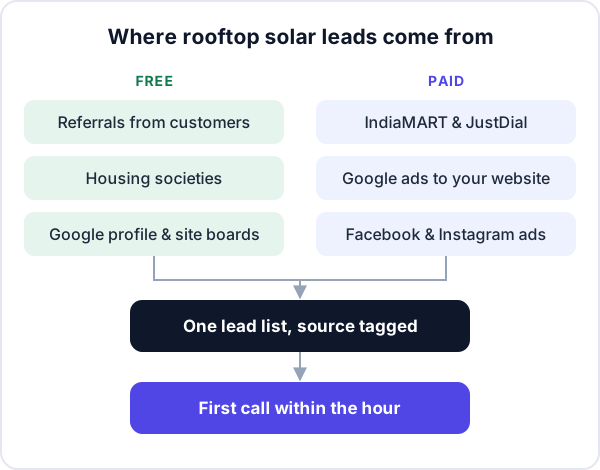
Where solar leads come from
1. Referrals from installed customers
The strongest source, and the one most installers leave to chance. A neighbour who can show you last month’s bill does more selling than any ad. Make it a routine rather than a hope:
- Ask at handover, when the customer is happiest, whether anyone in the building or family is thinking about solar.
- Ask again after the first reduced bill. That is the moment they start telling people anyway.
- Record the referrer’s name on every referred lead, so you can thank them — and so you can count how many installations referrals brought in.
2. Housing societies and apartment groups
One society committee meeting can produce ten enquiries, and rules for common-area and society rooftop systems are a genuine question many committees have. Offer a short talk or a free evaluation of the common-area electricity bill. Bring a one-page sheet with a real example from your area (with the customer’s permission) rather than a brochure.
3. Google search and Google Business Profile
“Solar panel installer near me” and “rooftop solar in [city]” are searched by people who have already decided to buy. A complete Google Business Profile — correct phone, working hours, photos of real installations, and reviews from actual customers — is free and often brings better leads than paid ads. Reply to every review.
If you run Google ads, send them to a page on your website with an enquiry form, not to your home page. And make sure the form’s enquiries reach a person the same day. Sending your website enquiry form into your CRM covers how.
4. IndiaMART and JustDial
Both work for solar, especially for commercial and small-industry rooftops on IndiaMART. Both have the same catch: the buyer contacts several sellers at once. Whoever calls within the hour, with a sensible first question about the monthly bill and roof, is usually the one who gets the survey. A buy-lead that sits in the seller panel until the evening is money spent for nothing. Connecting IndiaMART to your CRM gets these leads into one list the moment they arrive.
5. Your installations themselves
A small, neat board on the parapet of a finished roof (with the owner’s permission), your number on the van and a clean site during installation all produce calls from the street. Tag them as their own source — “site board” or “van” in the note — so you know they are working.
6. Facebook, Instagram and WhatsApp
Short videos of a real installation, a before-and-after bill (with permission) and simple explanations of how net-metering works get shared locally. Paid Facebook ads can bring a lot of enquiries cheaply, but expect many to be curious rather than ready. Judge them by installations, not by the number of form fills.
Qualify on the first call
More leads are only useful if you can tell quickly which ones to send a surveyor to. A two-minute qualifying call saves a wasted trip across town. Ask:
- What is your monthly electricity bill, and does it jump in summer?
- Is the house your own, and what kind of roof is it — RCC, sheet or tiles?
- Single-phase or three-phase connection? (Many people will not know; the bill usually says.)
- Are you planning to apply for a subsidy scheme?
- When are you hoping to install?
Write the answers down against the lead, not on a notepad. The surveyor should read them before leaving, and the salesperson should read them before calling back.
Customers will ask about rooftop solar subsidies, including the central PM Surya Ghar scheme. The amounts, eligibility and steps vary and change, so point customers to the official portal and your state DISCOM for current rules rather than quoting a figure from memory.
Follow up for longer than feels comfortable
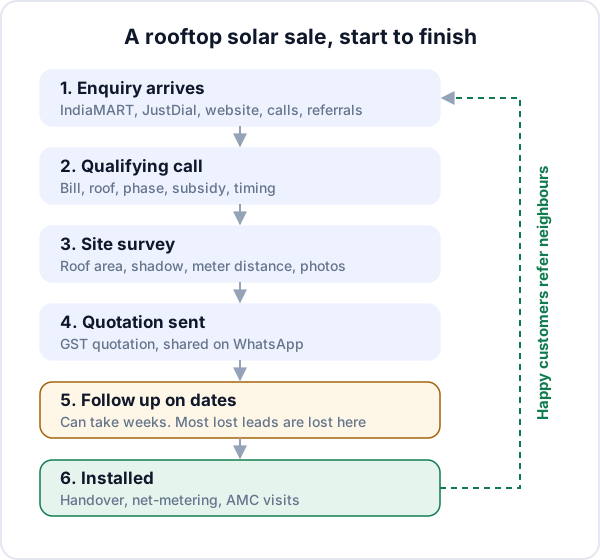
Solar is a long sale. A homeowner who says “call me after the next bill” or “after Diwali” usually means it. The installer who writes that date down and calls on it wins the job. The one who relies on memory does not.
A workable rhythm for a residential lead:
| When | What to do |
|---|---|
| Within the hour | First call: qualify and offer a site survey |
| Survey + 1 day | Send the quotation, and a WhatsApp message saying it has gone |
| Quotation + 3 days | Call: questions about panels, inverter, warranty |
| Quotation + 10 days | Call: comparing quotes? Offer to explain the difference |
| The date they gave you | Call on that exact date, and mention it |
Every open lead should have a next follow-up date. A lead with no date is a lead nobody will call. How to stop missing customer follow-ups goes into the habit in more detail.
Know which sources install
After a quarter, count installations by source, not enquiries. Facebook may bring the most enquiries and the fewest installs. IndiaMART may look expensive per lead and cheap per installation. Referrals will probably bring few leads and win most of them. The sum takes half an hour, and it decides where next year’s marketing money goes. Tracking lead sources works through it with rupee figures.
Where Enkay CRM fits
Enkay CRM from Enkay Technologies does not find leads for you. It keeps the ones you already get from slipping away. IndiaMART, JustDial and website form enquiries arrive in one lead list by themselves once connected, already tagged with their source. Calls, referrals and WhatsApp enquiries are added by hand with a phone number and a source label.
Each lead carries its requirement, value and a next follow-up date, and the Today screen shows overdue follow-ups above today’s. Survey and installation jobs, GST quotations with a share link, and AMC contracts for cleaning visits are all on the same customer. Enkay CRM for solar installers walks through the whole sale, from enquiry to net-metering.
Frequently asked questions
What is the cheapest source of solar leads?
Referrals from customers whose systems are already working. They cost nothing, and the person enquiring has already seen a real electricity bill come down. Ask at handover and again after the first bill, and record the referrer on the new lead.
Are IndiaMART leads worth it for a rooftop solar installer?
They can be, but IndiaMART buyers often send the same enquiry to several sellers, so the installer who calls first has the advantage. Track what each paid source costs per installed customer for at least one quarter before renewing or cutting it.
How long does a residential solar lead take to close?
Often weeks to a few months. Homeowners wait for the next bill, check subsidy rules, talk to family and compare quotes. Every open lead needs a dated next follow-up, or it goes quiet and installs with someone else.
Does Enkay CRM find solar leads for me?
No. Enkay CRM does not generate or sell leads. It collects the ones you already get: IndiaMART, JustDial and your website form arrive automatically once connected, and calls, referrals and WhatsApp enquiries are added by hand with a source label.
Keep reading
Try Enkay CRM free
Every enquiry in one list, a follow-up date on each one, and your whole team on the same page. Free for one user — not a trial, no credit card.